
What Is a vCIO and What Do They Do? 7 Reasons Your Business Needs One
April 7, 2025


If you’re like most SMB leaders, you’ve probably wondered how to get more strategic about your technology decisions without breaking your budget.
In fact, 64% of SMBs say technology is their primary factor for reaching business goals, yet many don’t have dedicated IT leadership in place. That’s exactly why more businesses are turning to Virtual Chief Information Officers (vCIOs). But what exactly is a vCIO, and could your company benefit from having one? Let’s dive right in.
| “A vCIO bridges the gap between tech potential and real-world results, empowering SMBs to punch well above their weight.”- Thad Siwinski, CEO of Prototype IT |
What Is a vCIO and What Do They Do?
A Virtual Chief Information Officer—often called a vCIO—provides the same strategic and executive-level tech guidance as a full-time, in-house CIO, but on a flexible, outsourced basis. If you’ve ever wondered “what is a vCIO?” or “what does a virtual CIO do?”, the short answer is that they help you align every tech decision with your business goals. Instead of simply troubleshooting day-to-day glitches, a vCIO focuses on driving growth, innovation, and efficiency.
Top-level technology leadership can be the key difference between companies that adapt and those that stagnate. A vCIO delivers that leadership without the hefty cost of a C-level employee on your permanent payroll.
Is a Virtual CIO Service Right for You?
Still on the fence about whether a vCIO is worth the investment? It often comes down to how fast your IT needs are growing versus the resources you have in place. If rapid expansion, evolving security threats, or complex compliance requirements are putting a strain on your current setup, a vCIO can fill the strategic gap. Even stable businesses can benefit from an external perspective that questions outdated assumptions and introduces innovative technology roadmaps. According to CompTIA, regular assessments of IT capabilities help leaders decide if fractional support is more cost-effective and impactful than building everything in-house.
Ask yourself:
- Do you have a strategic IT plan that goes beyond everyday fixes and actually supports long-term business goals?
- Are you budgeting for key investments—like critical updates, compliance measures, or emerging technologies?
- Is cybersecurity under control, with proactive monitoring and rapid incident response?
If you’re finding gaps in any of these areas, a vCIO can help you refocus on growth and innovation rather than constantly putting out IT fires.
Get the strategic IT leadership your business needsPrototype IT’s vCIO services keep your business secure, scalable, and ahead of the competition. |
7 Benefits of Hiring a vCIO
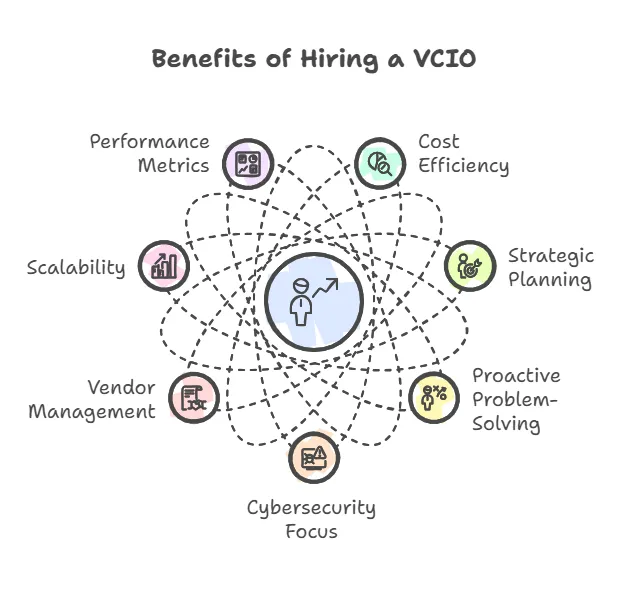
Whether you’re exploring the concept of a vCIO for the first time or revisiting it, there are numerous advantages that can significantly boost your operational efficiency. Here’s a closer look at the 7 benefits of hiring a vCIO and why they matter:
1. Cost Efficiency
You gain C-level strategic expertise at a fraction of the cost of hiring a full-time CIO. By leveraging a pay-as-you-go model, you can allocate resources where they matter most—like new software rollouts or system upgrades—without committing to a hefty annual salary and benefits package.
2. Strategic Planning
A vCIO develops a long-range technology roadmap that aligns seamlessly with your core business objectives. Instead of ad-hoc tech decisions, you’ll have a clear plan for system upgrades, cybersecurity investments, and scalability. Explore more about strategic IT alignment on Thought Exchange.
3. Proactive Problem-Solving
Rather than waiting for IT incidents to escalate, a skilled vCIO identifies potential trouble spots early on. This might involve conducting periodic risk assessments or performance checks, ensuring threats are neutralized before they hinder your operations.
4. Cybersecurity Focus
Virtual CIO solutions typically include advanced security measures—such as multi-layered defenses, threat intelligence, and employee training. This robust approach to cybersecurity is critical for safeguarding sensitive data and maintaining customer trust.
5. Vendor Management
From negotiating contracts to coordinating software implementations, a vCIO handles the complexities of vendor relationships on your behalf. This saves you from juggling multiple points of contact and often unlocks better rates and service-level agreements.
6. Scalability
As your company grows, your technology requirements shift as well. Virtual CIO services can quickly adapt to these changes—adding or scaling back resources without the red tape of a traditional in-house hire.
7. Performance Metrics
A great vCIO doesn’t just recommend technologies; they track how well each initiative performs. By monitoring ROI, user adoption, and other key indicators, they can pivot strategies when something isn’t delivering the desired results.
When each of these benefits is considered together, the case for a vCIO becomes clear: it’s about equipping your business with the strategic leadership and operational flexibility needed to stay competitive in a fast-evolving digital market.
Actionable Strategies to Work with a vCIO
Making the most of vCIO services requires more than just a handshake and a service-level agreement. It’s about cultivating a dynamic partnership where strategic goals meet actionable insights. Here are several concrete steps to ensure you and your vCIO remain aligned and effective:
- Define Your IT Roadmap
Start by outlining your top technology priorities—whether it’s bolstering cybersecurity measures, upgrading legacy systems, or integrating new collaboration platforms. When you communicate these objectives from the outset, your vCIO can craft a structured plan that’s built around specific, measurable outcomes. - Set Clear Benchmarks and KPIs
Agree on measurable performance metrics, such as system uptime, response times, or user satisfaction scores. These key indicators provide a roadmap for success and help you see at a glance if you’re making real progress or if adjustments need to be made along the way. - Adopt Standardized Frameworks
Consider leveraging COBIT (an IT governance framework) to ensure your processes and policies align with industry best practices. When both you and your vCIO operate using common standards and language, you can quickly spot gaps and address them before they turn into bigger systemic issues. - Establish Regular Check-Ins
Schedule recurring meetings—weekly, bi-weekly, or monthly—to discuss project milestones, address any roadblocks, and review new opportunities. This consistent communication fosters transparency, builds trust, and ensures that your vCIO remains an active contributor to your business goals rather than a passive observer. - Encourage Cross-Functional Collaboration
Invite other department heads—like marketing, finance, or operations—to key IT strategy sessions. By bringing different perspectives to the table, you and your vCIO can create tech solutions that serve the entire organization, not just the IT department. - Maintain an Ongoing Feedback Loop
Request regular reports on performance metrics, budget usage, and upcoming project proposals. In turn, share updates on internal shifts—such as a new product launch or a departmental reorganization—so your vCIO can adapt strategies accordingly. - Promote End-User Education
A well-structured vCIO engagement isn’t just about high-level strategy; it’s also about empowering your team. Encourage your vCIO to lead training sessions, workshops, or webinars that help employees understand new tools, cybersecurity best practices, and overall IT policies. - Monitor ROI and Celebrate Wins
Keep an eye on the return on investment through data-driven insights—like cost savings on software licenses or reduced downtime after system upgrades. Share these victories with your entire organization to reinforce the tangible value that a vCIO brings.
By following these guidelines, you create a strong foundation for an impactful partnership with your virtual CIO. When goals are clear, accountability is shared, and communication channels are open, your vCIO can help you transform technology challenges into strategic business advantages.
| Get Strategic Advice on IT Management From Our Learning Center |
vCIO vs. In-House CIO
| Aspect | In-House CIO | vCIO |
| Cost | High salary plus benefits | Flexible, pay-as-you-go model |
| Availability | Dedicated solely to your company | Balances multiple clients but offers specialized expertise |
| Strategic Perspective | Deep knowledge of internal processes | Wide market insight from varied engagements |
| Scalability | Limited by internal resources | Can expand or reduce scope as business needs change |
| Skill Diversification | Often specialized in one business environment | Broad experience across industries |
Prototype IT Delivers the IT Leadership Your Business Needs—Without the Overhead
Your business thrives on technology, but without expert guidance, IT challenges can cripple productivity, expose security risks, and drain resources. That’s where a vCIO from Prototype IT changes the game—bringing executive-level strategy without the cost of a full-time hire. From future-proofing your IT infrastructure to proactively tackling cybersecurity threats, our vCIO services help align technology with your business goals, optimize costs, and drive long-term growth.
Don’t let poor IT decisions hold your company back. Partner with Prototype IT today to get the strategic IT leadership your business deserves. Contact us now to get started!
| Hire a Team of Expert IT Consultants in The State of Texas | ||
| Dallas | Fort Worth | Lewisville |
Free Network Assessment:
Get In Touch
- ▶ 401 E. Corporate Dr STE 220
Lewisville, TX 75057 - ▶ 600 W. 6th St Suite 485
Fort Worth, TX 76102 - ▶ 13155 Noel Rd Suite 905
Dallas, TX 75240 - Phone: (214) 270-0850
- Web: https://www.prototypeit.net
