
Effective Cloud Migration Strategies for Modern Businesses
June 9, 2024



93% of organizations are adopting or considering the move to the cloud. Migrating your IT infrastructure to the cloud is no longer just an option; it’s a necessity for maintaining a competitive advantage. However, many businesses face the daunting task of transitioning their vast, integral systems without disrupting their ongoing operations.
This complex process often leads to significant downtime, data loss, or spiraling costs if not strategically planned and executed.
As Thad Siwinski, CEO of Prototype IT says, “Neglecting detailed planning in cloud migration invites inefficiency and jeopardizes data integrity.”
This guide provides a comprehensive overview of developing a robust cloud migration strategy, ensuring a smooth transition while optimizing performance and cost.
Step 1: Define Your Business Goals
Before diving into cloud migration, it is essential to clearly define what your business aims to achieve through this transition. Goals may include increasing agility, enhancing security, achieving cost savings, or improving scalability.
Understanding these objectives will guide the entire migration process, helping you make informed decisions about the scale and scope of the project.
Stop Worrying About Cloud Security Risks!Secure your data with Prototype IT’s robust protection measures. |
Step 2: Conduct a Thorough Assessment of Your Existing Infrastructure
Assess your current IT environment to identify what resources you have and what needs to be migrated or transformed. This assessment should cover:
- Technical Review: Analyze your existing applications and data to determine their cloud readiness. Identify which applications are cloud-native and which ones will require modifications.
- Business Analysis: Evaluate how your applications support your business processes. This will help prioritize which applications to migrate based on their business impact and complexity.
- Security Assessment: Research from CloudSecureTech states that 60% of small businesses that get hit by a cyber attack go out of business within six months. This is why reviewing your current security posture and compliance requirements is important to ensure that the cloud environment you choose aligns with your security needs.
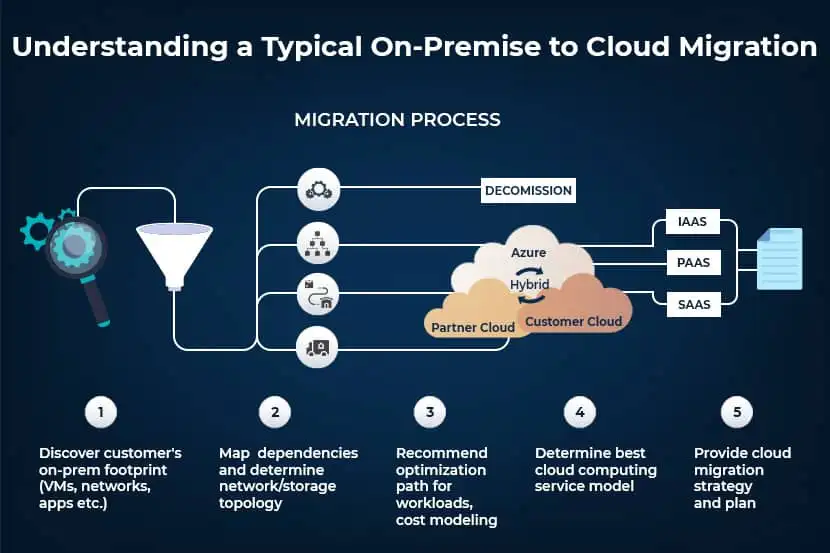
Step 3: Select the Appropriate Cloud Environment and Migration Strategy
Choosing the right cloud platform (public cloud, private cloud, or hybrid cloud) and the migration strategy (rehosting, re-platforming, or refactoring) is critical. Each option offers different benefits and should be chosen based on the specific needs of your business. For instance:
Public Cloud: Best for businesses looking for scalability and flexibility without heavy upfront costs.
Private Cloud: Suitable for businesses with stringent data security and compliance requirements.
Hybrid Cloud: Combines elements of both public and private clouds, ideal for businesses that want flexibility while maintaining control over sensitive operations. 53% of IT decision-makers say multi-cloud helps them achieve their business goals
Source: Spiceworks
Step 4: Design and Plan Your Migration
Develop a comprehensive migration plan that includes:
- Blueprint of the Migration: Outline how and when the applications and data will be moved.
- Resource Allocation: Determine the human and financial resources needed for the migration.
- Risk Management Plan: Identify potential risks and contingencies to mitigate them.
Step 5: Execute the Migration
With a detailed plan in place, begin the execution phase. This involves the actual moving of applications and data to the cloud according to the chosen strategy. During this phase:
- Communicate Regularly: Keep all stakeholders informed about the migration progress.
- Adhere to the Schedule: Follow the timeline set out in the migration plan closely.
- Use Appropriate Tools: Employ robust migration tools and services to facilitate a smooth transfer.
Step 6: Monitor and Optimize Post-Migration
After migrating to the cloud, ongoing management and optimization are vital to ensure the environment operates efficiently and continues to meet business needs. This involves:
- Performance Monitoring: Regularly check system performance to ensure it meets the expected standards.
- Cost Management: Keep track of cloud spending to avoid cost overruns.
- Security and Compliance: Continuously monitor security measures and ensure compliance with relevant laws and regulations.
Key Considerations for Cloud Migration Strategies
Here are some key considerations you should evaluate when developing your cloud migration strategy. It includes aspects crucial to a successful migration but often overlooked.
| Consideration | Description | Importance |
| Data Governance | Ensuring data integrity, security, and compliance with regulations during and after migration. | High |
| Interoperability | Compatibility of cloud services with existing applications and systems to ensure seamless functionality. | High |
| Change Management | Preparation and support for organizational changes, including training for new cloud technologies. | Medium |
| Vendor Lock-in | Potential dependency on a single cloud provider and the implications for future infrastructure changes. | Medium |
| Scalability Potential | Ability of the cloud environment to scale up or down based on business needs. | High |
| Network Requirements | Assessment of bandwidth and connectivity needs to ensure uninterrupted services during and after migration. | High |
| Business Continuity Planning | Strategies to maintain operations during the migration, minimizing downtime and disruptions. | High |
| Cost of Transition | Initial and ongoing costs associated with moving to and maintaining cloud infrastructure. | High |
| Post-Migration Support | Availability and quality of support from the cloud provider for troubleshooting and optimizations post-migration. | High |
| More resources you might like: |
Ensure a Smooth Transition to the Cloud with Prototype IT
Developing a cloud migration strategy is an intricate process that requires careful planning and execution. By following these detailed steps, businesses can ensure that their transition to the cloud is successful and beneficial.
| Discover Trusted Cloud Services Near You: |
Prototype IT specializes in guiding companies through this critical process, ensuring that your migration is efficient, secure, and aligned with your business goals.
For expert help with your cloud migration strategy, contact us to schedule a free consultation. Together, we can move your business forward into a more agile and scalable cloud environment.
Free Network Assessment:
Get In Touch
- ▶ 401 E. Corporate Dr STE 220
Lewisville, TX 75057 - ▶ 600 W. 6th St Suite 485
Fort Worth, TX 76102 - ▶ 13155 Noel Rd Suite 905
Dallas, TX 75240 - Phone: (214) 270-0850
- Web: https://www.prototypeit.net
