
Strengthening Business Cybersecurity for National Work From Home Day
May 16, 2024



Remote work has revolutionized the way we work, offering flexibility, increased productivity, and a better work-life balance. It’s given employees a chance to create a personalized work environment that enhances focus and job satisfaction.
However, it also presents unique cybersecurity challenges that must be addressed to protect remote employees and company data.
As Thad Siwinski, CEO of Prototype IT, says, “Remote employees often operate outside the protective bubble of office security systems, using personal devices and home networks that can be vulnerable to attacks. Cybercriminals increasingly target these weaknesses, putting sensitive company data at risk.”
A new Forrester study has found the shift to remote and hybrid working models has magnified IT operational challenges for 75% of organizations.
This article will explore effective cybersecurity strategies designed specifically for remote work environments. By implementing these measures, you can ensure that your remote workforce remains secure, productive, and protected against potential threats.
Join us in celebrating National Work from Home Day by making cybersecurity a top priority for your remote teams.
Stressed by Remote Work Vulnerabilities?Prototype IT secures your remote workforce with advanced cybersecurity measures. |
The Growing Threats in Remote Working
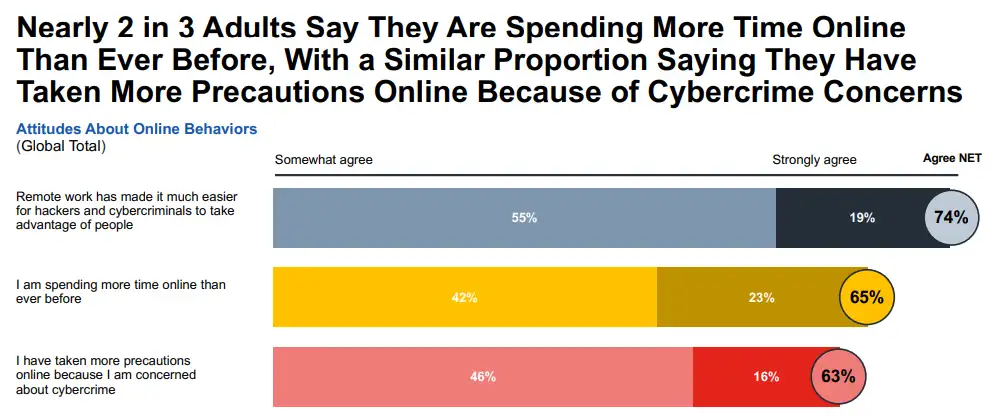
As remote work becomes more prevalent, identifying and mitigating the associated cybersecurity risks is crucial for protecting employees and company data.
- Use of Personal Devices and Unsecured Networks: Employees often use personal devices and home networks, which are typically less secure than corporate systems, increasing the risk of cyberattacks.
- Lack of Centralized Security Measures: Home offices do not have the centralized security measures found in traditional office environments, creating vulnerabilities.
- Increased Vulnerability to Cybercriminals: The decentralized nature of remote work makes it easier for cybercriminals to exploit weaknesses in security.
Source: Norton Report
Common Cybersecurity Threats and Their Countermeasures
| Cybersecurity Threat | Description | Potential Impact | Countermeasures |
| Phishing Attacks | Fraudulent attempts to obtain sensitive information via email. | Data breaches, financial loss, and compromised accounts. | Implement email filtering to train employees to recognize phishing. |
| Malware | Malicious software designed to damage or disable systems. | System downtime, data loss, and unauthorized access. | Use antivirus software regularly to update systems and software. |
| Ransomware | Malware that encrypts data and demands payment for its release. | Data loss, financial loss, and operational disruption. | Backup data regularly uses endpoint protection solutions. |
| Man-in-the-Middle Attacks | Interception of communication between two parties. | Data theft, financial loss, and compromised information. | Use VPNs to ensure communication tools are encrypted. |
| Brute Force Attacks | Repeated attempts to guess passwords. | Unauthorized access to systems and data. | Implement strong password policies using multi-factor authentication. |
| Insider Threats | Security risks posed by employees or contractors. | Data breaches, financial loss, and operational damage. | Enforce access controls, monitor user activity, and provide training. |
Key Cybersecurity Strategies for Remote Work On National Work From Home Day
1. Implement Strong Password Policies
Avast surveyed 2,000 households and found that 25% of people use an extremely easy-to-guess password such as their name, address, or phone number.
One of the simplest yet most effective cybersecurity strategies is enforcing strong password policies. Ensure that all remote employees use complex passwords that combine upper and lower-case letters, numbers, and special characters.
Encourage the use of password managers to store and manage passwords securely. Additionally, implement multi-factor authentication (MFA) to add an extra layer of security.
2. Use VPNs for Secure Connections
A Virtual Private Network (VPN) encrypts internet connections, making it difficult for hackers to intercept data. Encourage your remote workers to use VPNs whenever they access company resources. This is especially important when using public Wi-Fi networks, which are notoriously insecure.
3. Regularly Update Software and Systems
Keeping software and systems up to date is crucial for protecting against known vulnerabilities. Ensure that all remote employees regularly update their operating systems, applications, and antivirus software. Set up automatic updates where possible to minimize the risk of oversight.
4. Provide Cybersecurity Training
Human error is a significant factor in many cybersecurity breaches.
An average IT department wastes 12 hours a week correcting remote workers’ cyber mistakes. Hence, it is extremely important to provide regular cybersecurity training for your remote teams. This training can help them recognize potential threats and avoid risky behaviors.
Topics should include identifying phishing emails, safe browsing practices, and the importance of regular software updates.
| More resources you might like: |
5. Secure Home Wi-Fi Networks
Home Wi-Fi networks are often less secure than office networks.
Research from Avast also found that 79% of home WiFi networks use weak passwords, making them vulnerable to cyber-attacks. Encourage remote employees to change default router passwords, use strong encryption (WPA3), and disable features like WPS (Wi-Fi Protected Setup) that can be exploited by hackers.
6. Use Endpoint Security Solutions
Endpoint security solutions protect individual devices used by remote workers. These solutions can include antivirus software, firewalls, and intrusion detection systems. Ensure that all remote employees have these protections installed and regularly updated.
7. Implement Access Controls
Limit access to sensitive company information based on an employee’s role and responsibilities. Implementing access controls ensures that only authorized personnel can access critical data, reducing the risk of unauthorized access.
8. Use Encrypted Communication Tools
Ensure that all communication and collaboration tools used by remote teams are encrypted. This includes email, instant messaging, and video conferencing platforms. Encrypted communication tools protect sensitive information from being intercepted during transmission.
9. Regularly Review and Update Security Policies
As remote work evolves, so should your cybersecurity policies. Regularly review and update your security policies to address new threats and ensure they align with current best practices. Make sure remote employees are aware of any changes and understand their responsibilities.
Enhance Your Cybersecurity Defense With Prototype IT
Remote work has transformed the modern workplace, offering unparalleled flexibility and productivity benefits. However, with these advantages come critical security challenges that must not be overlooked. Protecting your remote workforce from cyber threats is essential to maintaining a secure and efficient operation.
National Work from Home Day is the perfect occasion to reinforce these strategies and commit to the security and productivity of your remote employees.
| Discover Trusted Cybersecurity Services Near You: |
Prototype IT specializes in providing robust cybersecurity solutions tailored to remote work environments. Contact us today to schedule a free consultation and learn how we can help safeguard your remote teams from potential threats.
Free Network Assessment:
Get In Touch
- ▶ 401 E. Corporate Dr STE 220
Lewisville, TX 75057 - ▶ 600 W. 6th St Suite 485
Fort Worth, TX 76102 - ▶ 13155 Noel Rd Suite 905
Dallas, TX 75240 - Phone: (214) 270-0850
- Web: https://www.prototypeit.net
