
What is Cloud Computing Security: Essential Strategies for Data Protection
May 30, 2024



Cloud computing offers unparalleled convenience and scalability. However, as more businesses move their operations to the cloud, ensuring the security of this data becomes paramount.
Many businesses underestimate the complexity of securing their cloud environments, leaving critical data vulnerable. According to a recent survey, 80% of companies have experienced at least one cloud security incident in the last year, and 27% of organizations have experienced a public cloud security incident—up 10% from last year.
In the rapidly evolving digital age, businesses must prioritize cloud computing security to safeguard their assets and maintain operational integrity. Beyond just a defensive measure, cloud security offers an opportunity to innovate and optimize business processes.
As Travis Fielder, VP of IT & Technical Operations for Prototype IT, says, “By integrating advanced security practices, organizations can foster a culture of vigilance and resilience, ensuring that their data remains protected against evolving threats.”
This blog will explore the importance of cloud computing security, identify common threats, and provide essential strategies for protecting your business.
Overwhelmed by Cloud Security Management?Prototype IT offers comprehensive cloud security solutions tailored to your needs. |
What is Cloud Security?
Cloud computing security encompasses the technologies, policies, and practices designed to protect data, applications, and infrastructure associated with cloud computing. This form of security addresses various aspects such as infrastructure security, data protection, identity and access management, and more.
Comparison of Cloud Models & Their Security Implications
| Cloud Service Model | Description | Security Implications |
| Infrastructure as a Service (IaaS) | Provides virtualized computing resources over the internet. Users manage operating systems, applications, and data. | Requires robust network security, regular updates, and strong IAM policies to protect against unauthorized access and vulnerabilities. |
| Platform as a Service (PaaS) | Offers hardware and software tools over the internet, usually for application development. Users manage applications and data. | Emphasizes application security, secure development practices, and data protection to prevent breaches during development and deployment. |
| Software as a Service (SaaS) | Delivers software applications over the internet on a subscription basis. Providers manage all infrastructure and platforms. | Relies heavily on the provider’s security measures, necessitating strong vendor risk management and data encryption policies. |
| Function as a Service (FaaS) | Allows users to execute code in response to events without managing servers. Ideal for microservices. | Focuses on secure code execution, event monitoring, and safeguarding against potential vulnerabilities in deployed functions. |
| Container as a Service (CaaS) | Provides container-based virtualization to deploy and manage applications. Users manage containers and orchestrations. | Requires container security, orchestration security, and monitoring for unauthorized access and vulnerabilities within container |
Key Components of Cloud Security
1. Infrastructure Security in Cloud Computing
This involves protecting the underlying hardware and software that supports cloud services. Infrastructure security includes securing virtual machines, managing vulnerabilities, and ensuring the integrity of operating systems and applications.
By safeguarding these foundational elements, businesses can prevent unauthorized access and potential disruptions to their services.
2. Data Security in Cloud Computing
Ensuring that data in the cloud is protected from unauthorized access and breaches is critical. This includes data encryption, secure data transfer, and data loss prevention (DLP) strategies to mitigate risks associated with data accessibility and human error. Implementing these measures helps maintain your data’s confidentiality, integrity, and availability.
3. Cloud Workload Security
Protecting workloads that run in cloud environments is crucial. This involves securing applications, virtual machines, and other resources to ensure they are not vulnerable to attacks. Regularly updating and patching software, along with implementing strong security configurations, can help mitigate the risk of exploits targeting your cloud workloads.
4. Network Security
Network security measures, such as firewalls, intrusion detection systems, and secure network configurations, help protect the communication between cloud resources and users’ devices. By monitoring network traffic and employing advanced security protocols, businesses can prevent unauthorized access and detect potential threats before they cause harm.
What are Cloud Security Threats?
Cloud security threats are various cyberattacks and vulnerabilities that target cloud environments. These threats include data breaches, account hijacking, insider threats, and insecure APIs. Understanding these threats is essential for developing robust security controls and strategies, especially for SMBs, as research from CloudSecureTech reports that 60% of small companies that get hit by a cyberattack go out of business within six months.
By staying informed about emerging threats, businesses can implement proactive measures to safeguard their cloud environments and avoid such devastating consequences.
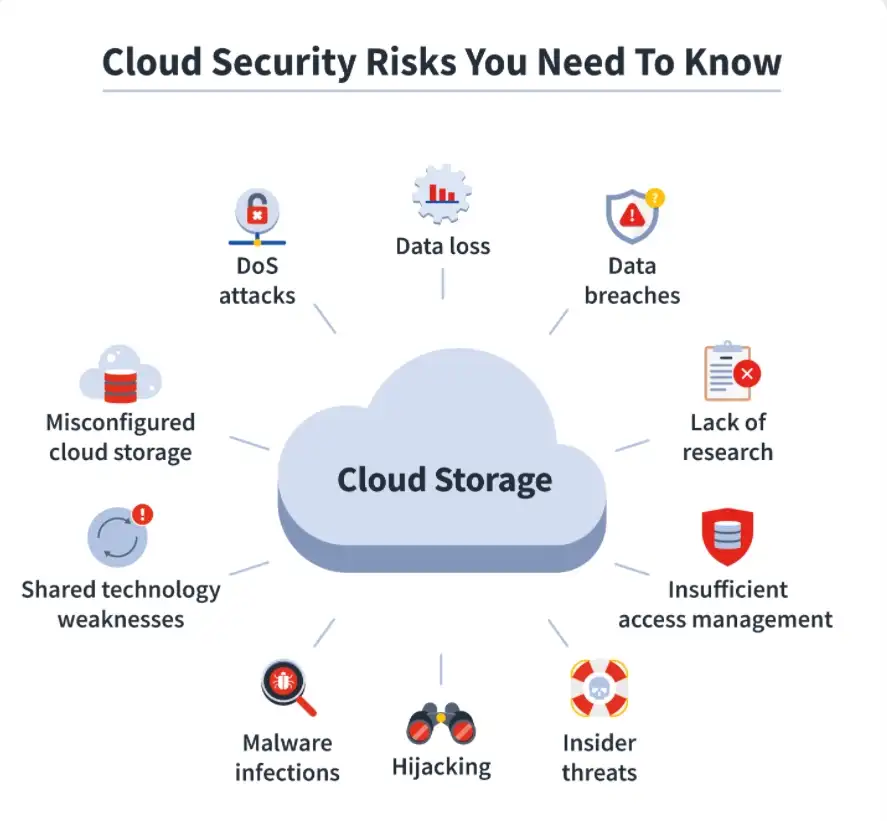
Source: Naukri.com
Essential Strategies for Data Protection in the Cloud
1. Implement Strong IAM Policies
83% of organizations report that at least one of the cloud data breaches they’ve experienced have been related to access. This is why access management is paramount.
Ensure robust identity and access management using multi-factor authentication, regular access reviews, and the principle of least privilege. This minimizes the risk of unauthorized access. Regularly reviewing and updating access permissions ensures that only the necessary individuals can access sensitive data and applications.
2. Encrypt Data
Utilize data encryption both in transit and at rest. Encryption ensures that even if data is intercepted, it remains unreadable to unauthorized parties. By implementing strong encryption protocols, businesses can protect sensitive information from potential breaches and unauthorized access.
3. Regular Security Audits
Conduct regular security audits and vulnerability assessments to identify and remediate potential security gaps. This proactive approach helps in maintaining a secure cloud environment. By continuously evaluating and improving security measures, businesses can avoid potential threats and vulnerabilities.
4. Use Cloud Security Solutions
Invest in comprehensive cloud security solutions that offer features like threat detection, data loss prevention, and automated security management. These solutions provide advanced protection against a wide range of threats, helping businesses to maintain a secure cloud environment.
5. Educate and Train Employees
Human error was reported as the leading cause of cloud data breaches by over half (55%) of IT and security professionals. Regular training and awareness programs can help employees recognize and avoid potential security threats. By fostering a culture of security awareness, businesses can reduce the likelihood of accidental data breaches and other security incidents.
6. Implement DLP Strategies
Data loss prevention strategies are crucial in ensuring that sensitive data is not accidentally or maliciously shared outside the organization. By implementing DLP tools and policies, businesses can monitor and control the flow of sensitive information, preventing unauthorized data access and loss.
7. Monitor and Respond to Threats
Continuous monitoring and a robust incident response plan are essential. Implementing security information and event management (SIEM) systems can help in real-time threat detection and response. By quickly identifying and addressing security incidents, businesses can minimize the impact of potential threats.
8. Leverage Security Features of Cloud Providers
Most cloud service providers offer a range of built-in security features. Ensure you are utilizing these features to their fullest potential. By leveraging cloud vendors’ security tools and services, businesses can enhance their overall security posture.
| More resources you might like: |
Why Cloud Security Matters for Your Business
Investing in cloud security is not just about compliance; it’s about protecting your business’s most valuable assets—its data and reputation. Here are some reasons why cloud security should be a top priority for your business:

1. Prevent Financial Losses
45% of breaches are cloud-based. Data breaches can result in significant financial losses due to fines, legal fees, and loss of business.
Effective cloud security helps prevent these losses. By investing in robust security measures, businesses can avoid the costly repercussions of data breaches and other cyber incidents.
2. Protect Sensitive Information
Ensuring data protection helps in maintaining customer trust and complying with data protection regulations. By safeguarding sensitive information, businesses can build and maintain a positive reputation, fostering customer loyalty and trust.
3. Maintain Business Continuity
Robust security measures ensure that your business can continue operating smoothly, even in the event of a cyberattack. By implementing comprehensive security strategies, businesses can minimize downtime and ensure uninterrupted operations.
4. Enhance Competitive Advantage
Demonstrating strong security practices can give your business a competitive edge, reassuring customers and partners that their data is safe with you. By prioritizing cloud security, businesses can differentiate themselves from competitors and attract more customers.
Stay Secure in the Cloud with Prototype IT’s Tailored Services
As technology advances, staying ahead of potential risks through proactive security measures will be key to sustained success in the cloud era. Embracing cloud security secures your business and positions it for growth by building trust with customers and partners.
| Discover Trusted Cloud Services Near You: |
Prototype IT stands ready to help your business navigate the complexities of cloud security. We offer tailored cloud security solutions that align with your business needs. Our team of experts can provide comprehensive threat detection, data loss prevention, and robust security management to ensure your data is safe.
Trust us to safeguard your business and help you achieve peace of mind. Contact us today to schedule a free consultation and learn how we can protect your data in the cloud.
Free Network Assessment:
Get In Touch
- ▶ 401 E. Corporate Dr STE 220
Lewisville, TX 75057 - ▶ 600 W. 6th St Suite 485
Fort Worth, TX 76102 - ▶ 13155 Noel Rd Suite 905
Dallas, TX 75240 - Phone: (214) 270-0850
- Web: https://www.prototypeit.net
