
A Strategic Guide to Cybersecurity For SMBs
September 30, 2025



Many small-and medium-sized businesses lack the resources to implement an enterprise-grade cybersecurity strategy. Of course, you can’t pull additional resources out of thin air, but the biggest mistake you can make is to assume that SMB cybersecurity is a low priority.
Approximately 43% of cyber attacks directly target small businesses. That’s because hackers assume that you assume that you’re “too small to be a target.” Proving their assumption about you correct puts an even larger target on your back than what was already there.
| “Some business owners assume that a small business only needs basic-level cyber protection, not much more than what one would implement for personal cybersecurity measures. Firstly, many personal accounts are less secure than they should be, and, secondly, any business needs stronger cybersecurity than personal accounts.” – Thad Siwinski, CEO of Prototype IT |
Even without a big budget and a large amount of resources, small and medium businesses can still do a lot to protect their sensitive data. If you’re not sure where to start, this guide on cybersecurity for SMB IT systems is here to help.
The 7 Biggest Cybersecurity Risks That Can Compromise SMB Cybersecurity
1. Phishing Attacks
Phishing uses fake emails, calls, or messages to trick employees into giving away passwords or financial data. Attackers target SMBs because they expect limited staff training and weaker filtering systems. This expectation is why SMBs receive the highest number of phishing emails at 1 in every 323 emails received across the average business.
2. Ransomware Attacks
Ransomware is malicious software that locks access to business systems or data until payment is made to the attacker.
Unlike larger organizations with dedicated recovery teams, SMBs often face these attacks with limited resources. Criminals understand this imbalance and exploit it, knowing that many smaller firms feel pressure to pay quickly rather than lose access to systems needed to run their business.
3. Business Email Compromise
Business email compromise (BEC) tricks employees, often in finance, into authorizing payments or transfers to fraudsters. Attackers impersonate managers or vendors using realistic fake emails or threads. SMBs are especially vulnerable because they often lack internal email verification steps or thorough training.
SMB Cybersecurity Can Be Enterprise-GradeAll you need is to work with the right managed IT partner |
4. Insider Threats
Insider threats refer to when someone within your IT network causes a data breach. They could be an employee, a contractor, a third-party vendor, or anyone else whom you trust to work inside your network.
These threats rarely have malicious intent. In the majority of cases, the insider caused the breach accidentally. With fewer resources, these errors tend to happen more frequently at SMBs.
5. Misconfigurations
Misconfigured cloud systems leave sensitive data exposed to the public or accessible with little effort. SMBs moving quickly to adopt cloud services sometimes skip security checks, which leads to open databases or weak permission settings. These mistakes create major entry points for attackers.
6. Denial-of-Service (DoS) Attacks
Denial-of-Service (DoS) attacks flood a network or system so it cannot respond. SMB websites or online tools can go offline or become slow under such attacks. Limited resources mean small businesses may not have systems built to handle overload.
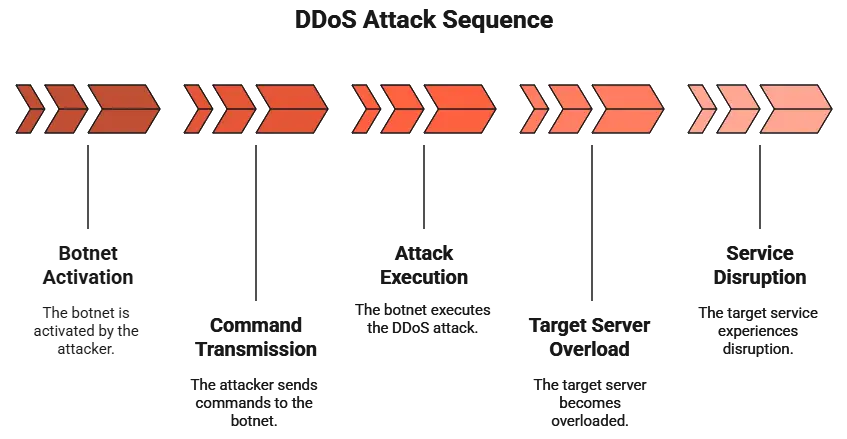
| What’s a Botnet?
A botnet is a network of computers infected with malware that is remotely controlled by an attacker. In a DDoS attack, the attacker uses this network to flood a target system with massive amounts of traffic. The combined power of many compromised machines makes it difficult for the target to distinguish real users from malicious requests. |
7. Generative AI Fraud
Scammers now frequently use generative AI to clone websites, impersonate employees, create fake job listings, or launch highly convincing phishing campaigns. These attempts are much more convincing than older phishing tactics, which makes them particularly malicious.
SMBs are hit harder because they often operate with smaller teams where one person manages multiple roles. That makes it easier for attackers to slip past routine checks and harder for staff to verify every request or communication.
Top 7 SMB Cybersecurity Measures That Every Business Needs
1. Multi-Factor Authentication
Require users to verify their identity with a second factor, such as a code sent to a mobile device or a hardware token. Start by enabling MFA across email, cloud applications, and VPNs, since these are common attack entry points. This measure makes it much harder for attackers to access accounts, even if a password is stolen.
2. Network Firewalls
Set up properly configured firewalls at the network perimeter and for internal traffic between your IT systems. Use rules that block unnecessary connections and regularly review them to adapt to new risks.
Firewalls prevent unauthorized traffic from reaching your internal systems. Without this layer, small businesses are more susceptible to intrusion attempts.
3. Endpoint Protection Tools
Deploy advanced antivirus software and endpoint detection software on every workstation, laptop, and mobile device that touches company data. Centralized management makes it easier to keep all systems updated and monitored.
| Learn More About How You Can Reduce Your Risk of Cybersecurity Threats |
4. Regular Patching
Adopt a structured patch management process for servers, applications, and operating systems. Automate updates where possible and schedule downtime windows so critical systems stay current without disrupting operations.
Unpatched systems are one of the easiest ways hackers gain access. Since SMBs may lack dedicated IT staff, patch delays create prolonged windows of exposure.
5. Data Backup Systems
Implement automated backups of critical files, applications, and systems. Store copies in both secure cloud repositories and offline locations to protect against ransomware or accidental deletion. Backups give you a clear path to recovery if attackers encrypt or destroy your data.
6. Security Awareness Training
Schedule recurring training sessions that cover phishing awareness, social engineering tactics, and safe browsing practices. Reinforce the training with simulated phishing campaigns to keep employees alert.
Employees are often the first target because attackers count on human error. Teaching staff to recognize suspicious emails or unusual requests reduces the risk of them handing over credentials or clicking on harmful links.
7. Access Control Policies
Limit user access to only the files, applications, and systems needed for their role. Apply role-based access and review permissions quarterly to remove outdated accounts.
Without these restrictions, one compromised account could expose your entire environment. Small businesses often allow broad access for convenience, which makes it easier for attackers to spread once inside. Tight access control reduces the blast radius of an incident.
5 Most Overlooked SMB Cybersecurity Solutions
1. Strong Password Management
You may be surprised to see that strong passwords are on our list of “overlooked” security strategies. The need for strong passwords is well-known. However, research shows that 84% of people neglect well-known password best practices.
The people in this 84% group make common mistakes, such as:
- Using widely available information, like birth dates or first names, as their passwords
- Sharing their passwords with other people
- Manually writing down passwords
- Not using unique passwords for multiple accounts
Never assume that your employees will follow password best practices because they are well-known rules. You need to make these practices mandatory if you want them followed at your business. You can also help your employees maintain good habits by providing password management software.
2. Vendor Risk Management
SMBs often choose vendors for cost or speed without asking about security practices. Many assume their vendors have adequate protections in place. Never take that for granted. Some businesses may also have different security standards for various reasons. For instance, perhaps there is a compliance regulation you must follow that your vendor does not need to follow.
Review each vendor’s security practices before signing an agreement. Ask for proof of certifications, policies for handling incidents, and insurance coverage. Limit the data you share with vendors to what is absolutely required.
3. Mobile Device Security
Employees often use personal phones and tablets for work. Yet, many SMBs skip formal mobile security policies. Securing these devices protects company data if they are lost, stolen, or targeted by attackers.
Deploy mobile device management tools on company phones and tablets as much as possible. Enforce encryption, regular updates, and remote wipe capabilities. Apply these rules to both company-owned and employee devices used for work.
4. Incident Response Planning
SMBs usually focus on prevention and ignore recovery. Owners may think that a plan is unnecessary until an attack occurs. Without written roles and practiced steps, teams waste time deciding what to do, which makes the impact worse.
Create a written plan that defines who does what during an incident. Include steps for identifying threats, containing them, removing them, and restoring normal operations. Test the plan with practice exercises and update it as systems change.
5. Network Segmentation
At many SMBs, everything runs on the same network because it is easier and cheaper to set up that way. Business owners may not realize that separating systems into different segments can greatly limit the spread of an attack.
Instead, separate systems into groups such as customer data, employee systems, and guest Wi-Fi. Use firewall rules or VLANs to control access between these groups. Review the setup regularly to match your business needs. Segmentation limits how far an attacker can move if they compromise one part of the network.
| Talk to Some of The Top IT Security Experts in Texas | ||
| Dallas | Fort Worth | Lewisville |
Talk to a Team of Professionals Who Are Experienced With Cybersecurity For SMBs
One of the most significant resources that SMBs often lack is access to cybersecurity experts. It’s estimated that approximately 4.8 million cybersecurity professionals are needed to fill this SMB cybersecurity gap globally. The reason for this disconnect is complicated and often varies depending on the business, but the result is the same.
If you’re one of the many SMBs that are struggling to find cybersecurity experts who can help manage your IT strategy, reach out to Prototype IT. Our services include 24/7 IT network monitoring and zero-trust standards. That means that you can feel confident that any emerging threats can be caught before they escalate and cause damage.
Contact us today to ask for more information.
Free Network Assessment:
Get In Touch
- ▶ 401 E. Corporate Dr STE 220
Lewisville, TX 75057 - ▶ 600 W. 6th St Suite 485
Fort Worth, TX 76102 - ▶ 13155 Noel Rd Suite 905
Dallas, TX 75240 - Phone: (214) 270-0850
- Web: https://www.prototypeit.net
