
What Is Data Breach Insurance? Protect Your Company Before It’s Too Late
April 22, 2025



According to Verizon, 60% of small companies that get hit by a cyber attack go out of business within six months. That sobering fact isn’t just a headline—it’s a wake-up call for businesses of all sizes.
“In an era where data fuels every business decision, ignoring breach coverage is like crossing a busy highway blindfolded.” – Thad Siwinski, CEO of Prototype IT.
If you’re looking to protect sensitive customer information and sustain your hard-earned reputation, you’re already ahead of many. In the next sections, you’ll learn how data breach insurance can serve as a vital safety net in a world where cybercrime never sleeps. Let’s dive into what it covers, how to pick the right policy, and the pitfalls you can’t afford to overlook.
Don’t Wait Until a Cyberattack Exposes Your GapsOur cybersecurity experts will help you strengthen your defenses and meet insurer requirements. |
The Skyrocketing Costs of a Breach
Cybercriminals know where to hit you hardest—your data. A single ransomware attack can drain your finances faster than you might imagine. According to the IBM Cost of a Data Breach Report, the average cost of a breach globally is now over $4.88 million. For a small to mid-sized business, those costs could be devastating, crippling day-to-day operations and eroding customer confidence overnight. Even if you manage to survive the initial blow, ongoing reputational damage may push you toward more dire financial losses. Simply crossing your fingers is an expensive—and dangerous—gamble.
What Exactly Is Data Breach Insurance?
When you ask what data breach insurance is, you’re essentially asking about a specialized form of coverage designed to mitigate the fallout from cyber incidents. This type of insurance against data breach events covers expenses like legal counsel, forensic analysis, and even the costs of notifying affected customers. Unlike general liability policies, cyber data breach insurance zooms in on risks tied to hacking, malware, ransomware, and other digital attacks. If you’re uncertain about the specifics, it’s worth checking out the National Association of Insurance Commissioners (NAIC) to learn how these policies fit into a broader cybersecurity framework.
Key Coverage Elements: What Does Data Breach Insurance Cover?
When you invest in data breach insurance, you’re essentially buying peace of mind. But what does data breach insurance cover exactly, and why does it matter? Here are the comprehensive elements your policy should ideally include:
1. Legal and Regulatory Costs
- Why It Matters: In the event of a breach, regulators can slam you with fines for not adhering to privacy laws like GDPR or HIPAA. Lawyer fees and settlement costs skyrocket quickly if you’re handling sensitive client data.
- Key Takeaway: Make sure your policy includes robust legal coverage. Some basic packages only cover external counsel, but you often need in-house expertise too.
2. Forensic Investigations
- Why It Matters: You need cybersecurity specialists to trace the origin of the attack, assess the damage, and plug vulnerabilities.
- Common Oversight: Businesses sometimes think they can rely on internal IT teams alone. However, forensic experts use specialized tools and methods that internal teams might not have.
3. Customer Notification and Credit Monitoring
- Why It Matters: Most jurisdictions require you to promptly notify affected individuals and provide credit monitoring if their personal details are compromised. This can be one of the most expensive parts of a breach.
- Potential Pitfall: Delayed notifications may expose you to additional legal risks. Make sure your policy covers both notification costs and credit protection services.
- Learn More: FTC’s Data Breach Response Guide outlines the exact steps you need to take.
4. Crisis Management and Public Relations
- Why It Matters: Reputation can make or break a small to mid-sized business. Professional PR support helps you craft the right messaging to keep clients and partners on your side.
- Pro Tip: Look for policies that offer media consulting or direct crisis management funding. A single poorly worded press release can do more damage than the breach itself.
5. Business Interruption & Loss of Income
- Why It Matters: If a breach forces you to shut down operations—even temporarily—the revenue loss can be massive. Some insurers will compensate you for this downtime, letting you recover without draining your cash reserves.
- Check out: The Washington University of Human Resources offers resources on planning for operational disruptions.
All these elements combine to protect you from the wide-ranging financial and reputational damage that follows a breach. Cyber data breach insurance isn’t a magic bullet—it’s part of a multi-layered defense strategy.
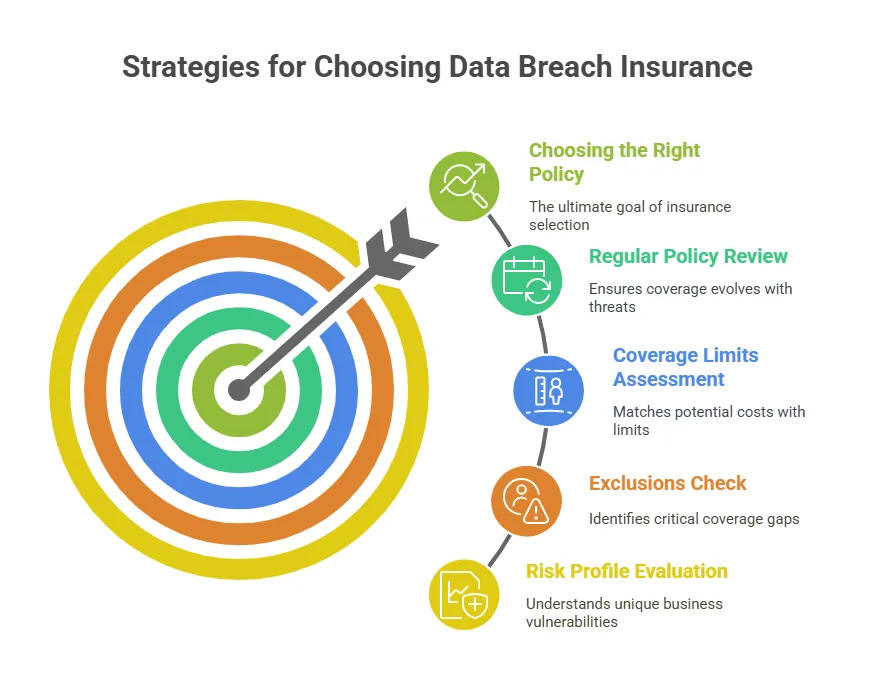
How to Choose the Right Policy: Five Actionable Strategies
Selecting the right data breach insurance policy can feel like navigating a maze of legal jargon and endless fine print. These five strategies will help you avoid confusion and find a policy that truly fits your needs:
1. Evaluate Your Risk Profile
- Action Step: Start with a thorough risk assessment—an internal audit of all digital assets, data handling practices, and past security incidents.
- Why It’s Crucial: Every business’s vulnerabilities are unique. A one-size-fits-all approach can leave gaping holes in your coverage.
2. Compare Coverage Options
- Action Step: Gather quotes from multiple insurers and compare both the premium and the scope of coverage.
- Pro Tip: Some policies focus heavily on first-party coverage (like crisis management) but skimp on third-party costs (like lawsuits from affected clients). Make sure you understand what you’re buying.
| Learn More About Avoiding Data Loss |
3. Check Exclusions Meticulously
- Action Step: Read the fine print for common exclusions like social engineering, ransomware, and acts of terrorism.
- Pitfall to Avoid: A policy that excludes key threats—like phishing scams—could leave you paying out of pocket for the most common attacks.
4. Assess Coverage Limits vs. Potential Costs
- Action Step: Calculate the worst-case scenario. If you store sensitive financial data, the cost of a breach could be in the millions.
- Pro Tip: Don’t be swayed by a low premium if the coverage limits are too small to realistically help you recover.
5. Review and Update Your Policy Regularly
- Action Step: Cyber threats evolve quickly—make it a habit to review your policy at least once a year, or whenever significant changes occur (e.g., new software systems, remote workforce expansions).
- Why It’s Important: Stale policies can be filled with gaps that leave you vulnerable to emerging threats.
By following these steps and staying vigilant, you’ll be in a strong position to pick a data breach insurance policy that truly safeguards your business. Remember that insurance is an investment in the longevity of your operations, not a sunk cost.
Common Pitfalls: Don’t Let Your Coverage Fall Short
Even the best policy can fail if you overlook certain details. Here are the pitfalls you need to dodge:
1. Assuming General Liability Covers Cyber Incidents
- Reality Check: Traditional liability policies rarely cover specialized cyber threats. You might be left footing the bill for data breaches, ransomware attacks, or regulatory fines.
- Consequences: Without dedicated insurance against data breach events, you’re exposed to enormous financial risk.
2. Underestimating the Scope of Modern Cyber Attacks
- Where It Goes Wrong: Some SMBs think they’re too small to be targeted. Yet, small and mid-sized businesses are prime targets because hackers assume weaker defenses.
- Pro Tip: Factor in social engineering scams, phishing, and emerging forms of ransomware when selecting your coverage.
3. Failing to Disclose Changes to Your Operations
- Why It’s Risky: If you expand into new markets, store more sensitive data, or adopt remote work, these changes affect your risk profile. Insurers often require updates.
- Outcome: Unreported changes could invalidate your coverage, leaving you unprotected when trouble strikes.
4. Skipping Policy Reviews and Renewals
- Long-Term Impact: Outdated coverage doesn’t reflect new threats or increased asset values. A lapse in coverage or a mismatch in policy details can spell disaster at the worst possible time.
- Action Tip: Schedule a quarterly or biannual check-in with your insurer or broker to ensure your policy aligns with your evolving operations.
5. Neglecting Preventive Measures
- Hidden Danger: Some insurers might require you to maintain certain cybersecurity standards—like firewall upgrades or staff training. Failure to do so could mean your claims get denied.
- Best Practice: Combine cyber data breach insurance with robust cybersecurity protocols. Investing in training, regular patching, and data encryption will lower your risk (and possibly your premium).
By avoiding these pitfalls, you can ensure your data breach insurance does exactly what it’s designed to do: protect your business from becoming another statistic. After all, a policy is only as good as your understanding of it—and your commitment to maintaining it.
Comparison Table: A Quick Glance at Key Coverage Features
| Coverage Feature | Typical Range | Why It Matters |
| Legal & Regulatory Costs | $50K – $2M+ | Addresses lawsuits, regulatory fines, and attorney fees. |
| Forensic Investigation | $10K – $500K+ | Identifies breach source and scope to prevent repeat attacks. |
| Customer Notification | $5K – $50K | Mandated in many regions; ensures legal compliance. |
| Credit Monitoring | $1K – $50K | Protects clients from identity theft and credit fraud. |
| Public Relations Support | $5K – $100K | Restores brand credibility in the face of public scrutiny. |
Protect Your Business with Prototype IT
Data breaches aren’t just expensive; they can unravel the trust you’ve built with clients and partners. You learned why an insurance policy that covers digital threats is an essential piece of modern business protection—alongside robust security tools, employee training, and ongoing network monitoring. Each of these elements intertwines to form a safety net that keeps your operations resilient in a volatile digital market.
Prototype IT delivers comprehensive Cyber Security Services that align with your insurance coverage, ensuring a seamless shield against threats. Ready to secure your future? Contact Prototype IT today for more information or to schedule a consultation and safeguard what you’ve worked so hard to build.
| Ask Our Texas-Based Team How You Can Prevent Data Breaches | ||
| Dallas | Lewisville | Fort Worth |
Free Network Assessment:
Get In Touch
- ▶ 401 E. Corporate Dr STE 220
Lewisville, TX 75057 - ▶ 600 W. 6th St Suite 485
Fort Worth, TX 76102 - ▶ 13155 Noel Rd Suite 905
Dallas, TX 75240 - Phone: (214) 270-0850
- Web: https://www.prototypeit.net
